
Author: Shirley Lynn

Morning Rituals to a Peaceful Relationship with ME

It doesn’t get better than this – a Sunday morning on a long weekend and the sun is bright, the clouds are drifting, the breeze is cool. The birds are singing their songs of celebration and good fortune, tulips are opening and the spring colours and smells are delighting the senses. Carlie and Rayna have had their walk, eaten breakfast and are joyously chewing bones out on the porch. I join them on the porch with my tea, taking in the sun and simply enjoying the simplicity and perfection of the moment.

I reflect on the importance of this moment of just hanging out with my dogs, with Nature and my cup of tea. I feel calm, relaxed and happy. I notice that Spring is in perfect relationship with itself. The flowers are in perfect relationship with each other. I am free to sit and be without worrying or focusing on what I ‘should’ be doing or will be doing the rest of the day. It’s a moment of being in right relationship with me. I bask in this moment and experience a wonderful sense of gratitude and inner harmony that I know will influence the rest of the day.

Today is a simple morning, not cluttered with extraneous mental thoughts or worries or tensions or activities about what needs to get done. It is a moment that arose out of being present in the moment and a softening to the fluidity of the moment’s dance. Being present to the moment opened the door for me to experience right relationship with myself, to create peaceful relationship with me!

You may already have your ways of practising peaceful relationship with yourself, but let me share some of the steps I took that created the environment and synergy of peaceful relationship with myself:

  1. Meditation as my first way to greet and celebrate the day.
  2. A moment of self healing to strengthen my intention and seek Divine sustenance for a resilient attitude for the day.
  3. A prayer for all sentient beings that each may experience peace, health, happiness and abundance this day.
  4. Because I like structure and focus, I make a reasonable and heart-centred list of what I want to accomplish each week. (And since I had this list planned going into the weekend, I could let go of any stress thoughts because I trust the flow and intention of the day).
  5. With Carlie, I have learned to go for a walk as soon as I get up, even before we eat breakfast. I attend also to my body and the rhythms that need to be awakened for the day.
  6. I allow space in my day for Spirit to ‘show up’ and ‘commune’ with me in whatever way is needed.

I know that as I practise these early morning habits of being in connection with Spirit, myself and Carlie, the rest of the day’s interactions are more harmonious and happy. I’m starting my day with the power of vital energy and the ease of Universal Harmony.

I recognize that not every day gets to have these moments of sitting and basking in the peaceful moment of a perfect spring day, late into the morning. However, I also know that when I lack the discipline to practise these spiritual habits in a morning, I have to work harder that day to sustain the ease of a resilient and positive attitude and harmonious connections. Why work that hard when all it takes is for me to get up in time to practise these habits and anchor peacefulness into my mind and heart?

Like they say, work smarter, not harder!

I’m a firm believer of writing down our insights, our thoughts and beliefs, our feelings and the general flow of what is happening in our internal life. It reveals so much of what is hidden to us … it reveals our soul and the blocks to our soul.

This year for me is about creating peaceful relationships and I have invited you on this journey through stories and insights about what can support our path to such relationships. I will speak more about right relationship with self and the evening practice, but for this week, I invite you to write out your habits that promote and sustain right and peaceful relationship with yourself.

We are shortly stepping into the last half of the year. If you want to actually start creating peaceful relationships rather than just wishing for them, commit to a habit and start practising. And if you need help getting started to promote your own inner peace, I encourage you to set up an appointment with me and let’s get you moving forward.

Here’s to the perfect modelling of right relationship with self … thank you SPRING!

Namaste,

Shirley Lynn Martin
Extending the Power of No into our Animal Relationships

Submitted by Lucy Martin

I’ve been thinking more about the power of No, in part because I just posted online Shirley Lynn’s interview with Rosie on CBC earlier this spring, which was about saying no. I encourage you to listen to it if you haven’t already.

In surfing the web a little, it appears this is an issue that people struggle with a lot – in the workplace, at home, with friends and in other relationships. So perhaps it’s not surprising to also experience this challenge with our animal companions, many of whom hold great significance in our lives and hearts. On the surface, you might be thinking that I am advocating for denying our animals of all the treats and treasures that we love to indulge them with. You can relax and read on because I too contribute my share to the billions of revenue generated by the pet industry.

So where or how then, do I think we need to exercise the power of no with our animals?

Firstly, no is about establishing boundaries or limits – what is desirable behaviour and what isn’t. While there are societal expectations about how animals are supposed to behave, at least in public areas, there is a great deal of variance in what individuals find acceptable (or at least tolerable) in private. For instance, I expect Rayna to lay down when people approach to greet us (a work in progress) in public spaces, but at home we are much less formal and primarily require four feet on the floor and no mouthing other people or Carlie.

It is tempting to believe that our animals understand ‘plain English’ and when we say no to something, they understand and will respond accordingly. If you are lucky, they might stop doing the behaviour but then what? Do they look at you and then return to the behaviour that you just interrupted, or perhaps choose an alternate behaviour that may be better or worse?

The flip side of no is yes. Yes is the desirable behaviour. How do we communicate our yeses? By sharing information in the form of training. Training doesn’t necessarily require a trainer and going to classes (although sometimes that can speed the process); training simply means teaching desired skills and behaviours in a way the animal understands, practising and refining those behaviours, and consistently enforcing and reinforcing them.

You might be thinking this is a lot of work and it’s true, communication is work. It’s hard enough with people who speak the same language and share a similar cultural understanding. Animals don’t share our language, mores or understanding of the world. Your goal is to instill behaviours and strategies that will help your animal know what to do when the environment changes – guests come for dinner, a neighbour stops to chat on the street, another cat walks across the lawn, etc. A quick word or cue can prompt the appropriate action without undue stress or anxiety for either of you. It can be very reassuring and a real confidence booster when you have prepared and practised what to do in unfamiliar situations – for both you and your animal.

So the power of no with our animal companions is about instilling a vocabulary and skill-set of what the right answers are – the yeses. The more information we can share about what is desirable within our relationship, the better things will be. Less stress and anxiety for both of us. Like all meaningful relationships, this requires clear communication, an understanding and commitment to what is desirable and right for both of us, as well as a gracious heart when one or both of us screws up.

To all the animals out there who share our lives and hearts, thank you for sticking with us. We promise to keep working at teaching you the yeses to make living in our human-centric world a little easier. And when we get it wrong, please be gracious with your no.

It has been said that our animals are our greatest teachers, and I think that’s true. Learning how to communicate our expectations and desires to another species is a worthy endeavour in its own right. But these lessons can also be extended into our human relationships where it is just as important to express our needs, desires and expectations.

If you are struggling with knowing and expressing what your nos and yeses are in your significant relationship, Shirley Lynn is here for you. Call or email today to set up an appointment and reclaim your power.


When did you realize the power of NO?

This interview is part of a CBC radio show about the Power of No.

[audio:https://shirleylynnmartin.com/wp-content/uploads/2014/05/SLMARTIN_NO1.mp3|titles=listen]

I coached producer Rosie Fernandez to the realization that if you never say NO, you are not showing up honestly in your relationships. You also aren’t saying YES to the right things, time and energy for what you really want either. I invite you to listen to it.

You can also listen to the full show aired on March 5, 2014 called When did you realize the power of NO?
It’s a fun show and perhaps you will hear yourself in the stories that are told.

The Hawk, a 25 Year Old Cat and Easter – Divine Love Revealed

Spring is an incredible time of death and new life, of purification and resurrection. This past weekend, I buried a hawk that froze to death during the cold snap, my cat of 25 years that transitioned over Christmas, and I offered blessings to various other critters that froze or died in other ways from the long cold winter and now lay exposed after the spring thaw. Ironically, this time of burial comes close to the Easter story of death and resurrection which struck me in a new way this year.

Although I am not an active participant in any church at this time, I continue to reflect upon the perennial narratives and wisdom of various world religions to glean insight and wisdom for my own personal transformation and joyous living. With that in mind, I invite you to wonder with me where your own faith supports and awakens you to a more fulfilling and rich experience of Spirit and your human life and relationships.

The incredible gift in burying these creatures was feeling how incredibly true to their essence and purpose in life they remained. The joy I felt as I released the bodies into the ground, honouring their hearts, lives and spirits for the betterment of the entire planet is strangely beyond words. Carlie and Rayna respected the ceremony and made no attempts to disturb or disrupt the intention to return to Spirit those who had shared life with us. They ran and played around me and the bodies, but left them untouched.

Instead, Carlie and Rayna ran about smelling and sniffing the new life emerging from the ground after the long cold winter. Little shoots of daffodils and crocuses were coming up, seeking sun and life extending beyond the ground, their cave. In the Easter narrative, the stone is rolled away, offering us the opportunity to extend our life beyond the death, beyond the depression, the loss, the trauma of what we may have experienced. Though we may have experienced deep and profound pain in our life, we are never meant to stay in the death of it, to remain a victim of it. We are meant to rise again, to resurrect ourselves through the Divine extraordinary gift of love and service to us—to thrive.

As I was digging (and then broke the shovel and had to buy a new one!), having extended time to complete this ceremony, I was encouraged to reflect upon the incredible Divine Love offered to us in this natural cycle of life and transition. The joy I felt in this little ceremony with Nature and her inhabitants invited me to remember again that Divine Love only gives life, inviting us to thrive. Even when we experience darkness, death, the black hole or cave of our depression, trauma or shame, guilt consciousness that robs us of life, we are gifted with the wisdom to cultivate new life. We don’t need to look very far … typically just outside our windows or in the neighbourhood park. How profound is that love! A covenant love that always promises new life, more abundant love, a love that never ends!

So why is it that we are so frequently disconnected and what can we do? Recently I was aware of the negative impact of my doubt upon my life. My coach asked me what the opposite of doubt is for me and without hesitation, I offered, belief and faith. When I believe that I am loved in this extravagant, abundant life-giving way, doubt is contained. It doesn’t get fertilized. It was a reminder – rather than worry about my doubt at what isn’t working or didn’t happen or what isn’t coming into realization just yet, I’m invited to thrive anyway!

Here are a few ways I nurture my faith to thrive (to live in Love):

  1. Upon waking and before going to sleep I give thanks for the day and ask my Higher Self/Christ Self (or whatever language that fits for you) to guide me and support me to do what I must do, to think what gives me life and positive perspective, and to speak what gives life to me and others on this day.
  2. When I meditate, I practise surrender and letting go into Universal Love asking for healing and empowerment to live my purpose and grow in love.
  3. I enjoy a morning walk with our dogs and stay open to the connection to Nature and commune with Her for inner sustenance and deeper awareness of the flow of life.
  4. I spend some time reading what enhances my belief in what is good, what feeds my purpose and expands my inner perspective.
  5. I follow my inner guidance for what gives me balance and inner peace in my life. I take time out and honour my needs as I do others.
  6. Do activities and spend time on goals aligned with my vision for love, for peace, for happy community.

I know there are other ways I enhance my faith so that I can thrive (I am not a victim to my life), but these are core to me. I invite you to write out your own core ways that help you increase and nurture your faith. Make sure you do them when life is good, so they are a reflex when life presents its challenges.

As I placed the last shovel of dirt over the buried bodies, I experienced their spirit’s deep gratitude for honouring their lives and their purpose. They are happy and free and whole.  Namaste.

In Peace,  Shirley Lynn

AN OPPORTUNITY FOR SPRING GROWTH & RENEWAL …

  • Do you find yourself putting others’ needs ahead of your own?
  • Do you want to increase your confidence in handling the difficult situations and demands in your life?
  • Are you living a smaller story of yourself than what you dream?

Then say YES to this transformative Two-Day Workshop!

CULTIVATING JOYFUL LIVING: Balancing Self Care Within Relationships

Friday & Saturday, May 23rd-24th, 2014

9:00 am – 5:00 pm

Location is just north of Waterloo, ON

Cost: $285 plus HST

Get Inspired! Check online for details about the workshop that past participants continue to rave about:

CULTIVATING JOYFUL LIVING: Balancing Self Care Within Relationships

Loose Leashes Make Better Relationships

Submitted by Lucy Martin

This past Saturday, Rayna and I attended a workshop at Dogs in the Park (Guelph) on Loose Leashes. We had a full day of theory and practical exercises that laid the foundation for a much more pleasurable leash walk with my dog. I want to share what stood out for me:

  1. Keeping a loose leash usually takes months of consistent practice – it rarely happens on its own.
  2. It takes two to pull. It’s impossible to pull without something to pull against. I have at least as much to do with keeping a loose leash as Rayna.
  3. If my dog doesn’t understand how to walk beside me without a leash, she can’t understand how to work with me ON leash.
  4. The leash should only be for an additional measure of safety, and not the principle means for moving my dog from point A to B.

Wow! So walking with my dog is really about our RELATIONSHIP – a relationship that takes time to develop, being committed to the process, and having strategies available to help us move through the frustrations and breakdowns that are common in learning this skill.

A mantra at the training school is “set the dog up for success” but I think it really should be “set both you and your dog up for success.” Nothing enhances a relationship like accomplishing something meaningful together. But how do we do that? I know it’s not enough to just want my dog to ‘stop pulling and walk nicely’.

One of my takeaways was the value of taking it slow – not to try for an hour walk with no pulling but to start small with a step or two, and build on that. A walk to the car. A walk to the street corner… . I think it’s important to remember that walking on a leash is not a natural activity for any animal – when I put myself in Rayna’s paws, I understand the vulnerable position she is in. She has a ligature around her neck that I can tighten or pull when I choose. I can restrict her ability to investigate her world. I can hurt her in multiple ways, with leash as weapon.

When I take seriously the power I have when I hold the other end of the leash, I acknowledge that how I choose to use the leash has a direct impact on my relationship with Rayna. Do I use the leash to restrict or change her movements? Does the leash create a dynamic of conflict between us? Am I being fair in how and when I utilize the leash? Do I choose connection and enticement to redirect her when necessary (and the leash simply is superfluous)?

Defined as such, a loose (or taut) leash is a clear indicator of the state of our partnership. Are we engaged with each other and moving as a unit? Are both of our desires, interests and needs being met (is there give-and-take or is there an imbalance)? Is the leash a source of connection or control? If the leash wasn’t there, would the picture look any different? Will Rayna choose to engage with me over all else?

No, but that’s okay with me. We have different interests after all (trust me, there are places I don’t want to go, things I don’t want to smell or taste!). My hope is that by accepting and supporting her different desires and interests, Rayna will reciprocate with a willingness to participate in what is important to me (like being able to enjoy a walk together in an urbanized setting where leashes are expected and enforced).

So loosen those leashes on your dogs. And your human relationships too. I invite you to develop and refine the tools and skills you need to enhance your connections with whoever is at the end of your tether. A great resource to get you started is Shirley Lynn’s upcoming workshop called Cultivating Joyful Living: Balancing Self Care Within Relationships (May 23-24). Over the two days, you will “set yourself up for success” in a small supportive group. Learn and practise new skills to improve your relationships and your self. Join the growing list of participants who have benefited from this workshop.

Contact Shirley Lynn today to find out how this course will benefit you.

Re-visiting Japan in my mind

I’ve been reflecting again upon my journey to Japan over the past year and climbing Mount Karama while there. I had an interesting insight and recently I shared it with the Reiki Master group that is just beginning their journey. I thought I would briefly share it here too.

This path up the mountain to the temple has lots of stairs! And there are many shrines and sites along the path upward to offer your gratitude and gifts as symbols of your requests, inspirations and dedication to your spiritual path. Further up the mountain, there is the bell, a big one, that when you ring it, the sound echoes out over the mountain, speaking to the other surrounding mountain.

We reached the temple around noon hour and after touring the temple, the model of the universe in the basement of the temple and crawling under the buddha shrine to hold the rope that connects us to the infinite universe, we stopped for lunch. While eating lunch, most of us ‘played’ on the sacred geometry outside the temple in the embedded stonework and surrounding rocks which carry incredible vibrational energy.

What is interesting as I look back is that most of the tourists and pilgrims went to the temple and visited the temple and what was offered there and then went back down. For Reiki practitioners, however, the climb to the place where it is believed that Usui had his enlightenment experience, still was to be continued. And so we climbed more.

This time, there were no steps. Just the trodden path in the dirt and roots of the ancient trees. Some of the trees were over 800 years old. We got to the place where it was believed he had his enlightenment and it is a place of soil and exposed roots from trees.  Indeed, one had to be mindful in the path they walked. Nothing fancy. No Temple. No shrine. Just trees and mountain.

Close by was a wooden shack type of covering with some basic wooden benches. Here we lit incense, did Reiki and Sensei Inamoto offered us Reiju. A simple place in nature and we meditated. Very few people journeyed this path past the temple. Mostly Reiki practitioners and a few others who maybe wanted a more rustic experience.

We then travelled down the ‘back’ of the mountain through the trees and rocks again, though a trodden path, no concrete stairs.

It made me think how often we confuse ourselves about where and when ‘enlightenment’ is to happen. How often do we get caught in the trappings of decor and ritual, when perhaps it’s the simple place in Nature with pure mind, heart and deep listening and awareness (meditation) that the real experience of enlightenment happens.

It makes me think about Reiki methods of spiritual awakening. It is simple and yet with practice, provides profound results. It’s not complicated or fancy. Kind of like its birth place. However, like Nature, the relationship with Reiki and its healing effects can be as awesome and simple as we experience life in Nature.

Context and Environment: Fundamentals in Self Care Within Relationships

This morning I was walking with Carlie and her ‘cousin’ Roxie. Although cold, the sun was shining, the winds were light, and the sky was a perfect blue. It was a perfect day to dress warm and romp in the bush and open fields. As you may recall from previous blogs, the journey for these two dogs walking in joy and harmony together took more than a year of disciplined commitment, training and trust-building in all of us (their relationship had started on rocky terms).

At one point on the path, Carlie was racing after a squirrel while Roxie was nearby, keeping an eye on the wiener and cheese bag. I called Carlie back and treated them both with these scrumptious treats. A little later Roxie was sniffing something and soon was further behind. She was racing to catch up and Carlie, in her youthful playfulness, bounced toward her, asking through her behaviour, if they could play chase.  Roxie stopped and looked away. “No” was her response. Carlie stopped, but continued the play position. I called them both back to me and my bag of scrumptious treats. They both raced back to me side by side and sat nicely for their treats. I rewarded them and even gave them a bonus.

Roxie knows she doesn’t like the game of ‘chase’ with Carlie since Carlie hasn’t learned yet that she can’t play the same way she does with her big dog friends. (Roxie is only 15lbs while Rayna is 95lbs.) So their games cannot be about playing chase with each other. However racing for treats is a game they both enjoy and one in which all their sensibilities are honoured.

As I was engaging in this play and romping with them, it reminded me how fundamental it is for context and environment to be considered in creating and sustaining peaceful relationships. Last blog I invited you to listen to the CBC airing of the POWER OF NO, where I coached one of their producers in helping her to understand the power and value of saying ‘no’ and ‘yes’ in the right context. The context today with Carlie and Roxie was clearly how ‘no chase’ was being communicated for Carlie by Roxie and I, even when Roxie was delightfully racing back toward us. In Carlie’s mind, it was a perfect opportunity to start a chase game because speed, momentum and energy for it already were engaged – perfect context. Yet, for Roxie, it was an undesirable context.

For joy and harmony and respectful communication to be nurtured between the two of them, I had to change it and create a new context (a framework or structure) where both could ‘race’ similar to a play chase, without anyone becoming a ‘tussle target’. History has shown that tussling between them leads to conflict. But I called them back to me using a tone of voice that echoed ‘come play with me’ which brought both of them flying back. And since I was holding out the bag of treats for them to see, the context included getting a reward for playing this game in a new and safe way for everyone. And since they played it perfectly, they got a bonus reward!

The second fundamental that supported this ‘peaceful play’ was environment. I take them to an environment where their needs are met safely. Neither dog is a dog who seeks out dog acquaintances readily. Giving them open space, big enough that they can run and sniff and be ‘away’ from each other, paradoxically, over time has nurtured a trust that they can walk side by side harmoniously and sniff together at the same spots. On most days we go, there  are not a lot of other dogs or people, so they have had ample opportunity to simply experience each other in an open environment without additional stresses that might otherwise tax them or push them over their thresholds. This could jeopardize their communication with one another because the environment wouldn’t feel safe.

How often in business, schools or community recreational events do we fail to pay enough attention to the details of context and environment? When we are inviting people to change, to adopt new policies or to buy-in to new structures, whether in the office or the classroom, how mindful are we to the environment and context in mandating learning, productivity or change?

Biologically, our brain stem and limbic brain seek safety and go into flight-or-fight if a sense of physical and emotional safety is lacking. And yet, we ask people to perform and learn, to somehow ignore or even dismiss these parts of the older brain and to use the ‘rational’ mind to forge ahead and create solutions, answers or products. And then we wonder why people struggle with stress, anxiety issues and concentration behaviours at school or in the boardroom.

If you are a leader in any of these situations, consider how you could create a framework or context that supports the success of what you intend. Then look at your environment and notice if your environment supports the dimensions of the brain to be calm enough to learn, create or be productive. Create calm and relaxed environments (that doesn’t mean they can’t also be inspirational and engaging) and pay attention to the context or framework of what you seek to have happen. Notice how the results of relationships, communication and performance improve! It certainly did in a very conflictual relationship between two dogs I love.

If you want to learn more about paying attention to context and environment and how to listen to your body and the ways it tells you about what you need for right context and environment in creating peaceful relationships, then I invite you to attend my upcoming workshop Cultivating Joyful Living: Balancing Self Care Within Relationships, May 23-24. It promises to be the perfect spring tune-up and inner transformation to move you forward!

Peacefully & Namaste,

Shirley Lynn

Peace in Relationships: The Power of No

The little word no is such a powerful word when we use it well. No can change the well-being of our life and relationships. No can also be incredibly dis-empowering when we disregard its value and power to protect our health, our sense of integrity, our dreams and the time and energy it takes to realize them.

Why is this little word so hard to use, at least well? What I hear most from people about their resistance to saying no is the fear of not being liked, of not feeling like they belong or of not being needed (translation meaning not feeling significant).

Our inner consciousness offers us ‘red flags’ when something is amiss and it often speaks to us through our senses and our body, namely the gut (hence the phrase “I have this gut feeling”). Frequently, people share with me how they dismiss or disregard their gut instinct, for many reasons. Some go so far as to say, but how can we trust our gut, our intuition, that something is amiss and we need to say no?

Years ago, when I took significant steps to learn about intuition and to trust mine, I used a systematic approach of writing down what ‘my gut said’ towards something and ‘what my head said’. I then wrote out the results of what happened when I listened to my intuition and when I dismissed it. It’s a  powerful little exercise that lets one see exactly where one went against one’s gut instinct and what happened – as well as when one went with it. It was a turning point in saying ‘no’ to over-analyzing a situation and learning to trust my own inner wisdom that supports the knowledge of my mind.

Peace of mind comes with the practice of saying yes and no in alignment with one’s sense of self-respect, truth and self-dignity, especially in relationships. I have discovered that when I say ‘no’ and mean it, while also saying ‘yes’ when I mean it helps others experience my honesty and trustworthiness. When others know that I’m speaking honestly and they can trust my response as genuine, they aren’t left guessing about what I’m saying and meaning.

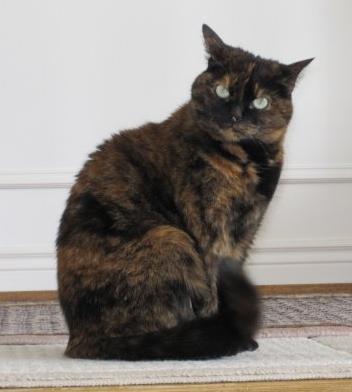
6-year_old_tortoise_shell_catOne of the best examples I can think of who exemplifies the appropriate use of no is our cat Taz. Her no comes without apology, without remorse or guilt and without much hesitation. It’s an emphatic ‘no’ to anything she doesn’t want, need or like. She doesn’t eat food she doesn’t want or like. She swats at anyone who doesn’t attend to her needs (or maybe not in the right way or not long enough). She speaks clearly and cleanly. Taz has been an ally in my teaching and coaching over the years as she has a keen awareness who needs to practise and learn self-respect by applying this two letter word.

Last week I coached Rosie Fernandez, a producer at CBC, as part of a radio show about the POWER OF NO. I invite you to listen to it. It’s a fun show and perhaps you will hear yourself in the stories that are told.

The truth is that if you never say NO, you are not showing up honestly in your relationships. It also says that you aren’t saying YES to the right things, time and energy for what you really want either. No is a big word. But even a two-year old knows its power – and practises this word OFTEN! If you’ve lost touch with this word, then as Rosie discovered, it’s time to make it your new friend and gain some momentum in creating peace in your relationships.

And Taz … I trust and respect her. I never question whether she’s being honest with me. She is! Her use of no connects us and makes our relationship more peaceful … because it’s truthful. I wish this same peace in relationships for all of us.

Namaste,

Shirley Lynn Martin


Time for a Relationship Detox?

Have you noticed that the sun is warmer and the days are longer? It has been a LONG winter but Spring IS on its way! Sure it’s still cold outside and if you haven’t gone on a tropical vacation (or even if you have), you are probably ‘sick and tired’ of it all. You might be feeling short-tempered and saying or doing things that you regret. You might be feeling sluggish and out of sorts. It’s a challenge to stay positive and motivated through a long drawn-out winter and it is easy to take it out on ourselves and on those closest to us.

Fortunately, a healthier approach will soon be available! How about a relationship detox? Clear out what isn’t working for you and rejuvenate your health and vitality. Join me this Spring for two full days and move out of your ‘winter’ and into your new joy-filled life.

During my upcoming workshop Cultivating Joyful Living: Balancing Self Care Within Relationships you will begin to clarify who you truly are and how you want to re-design your life. You will also benefit from peer support and accountability as you step out into your ‘real’ world and live the change. You will leave this workshop with a clear understanding about the mind/body/spirit connection – to empower you beyond this course with useful skills for your life and relationships.

Get acquainted with your own body-mind connection to clarify what will make you happier and more joy-filled. Learn to listen to your body – what makes you happy and what makes you sick. Find your own inner strength and courage to move out of ‘the drama’ and into a more secure and empowered sense of purpose. Discover and practise the skills essential to choosing the relationships, family bonds and career which reflect this more joyful you.

All this and so much more in two full days of learning, self-reflection, interactive exercises and group  dialogue. You will never be the same again (and you only have yourself to thank!).

CULTIVATING JOYFUL LIVING: BALANCING SELF CARE WITHIN RELATIONSHIPS

Friday & Saturday, May 23-24, 2014

9:00am – 5:00pm

Cost: $285.00 plus HST

What past participants have said about this workshop:

  • “This course has brought me the understanding and courage to look after myself in all aspects of my life. Knowing that I not only need to look after “me”, but that I am capable of doing so brings me peace, strength, love and joy. One of the most intimate relationships I am learning is with myself. I am also gaining a deeper and loving spiritual relationship with the Divine. I am grateful for this, as I have spent many years in conflict with my Higher Power.” Lynda
  • “Since taking the course I take more time to get quiet and ask my “inner-self” what it needs. I am learning to respect my own needs more, even if nobody else needs the same thing or understands why I need it.” Barb

More details about this transformative two-day workshop are available at Cultivating Joyful Living: Balancing Self Care Within Relationships. Or contact Shirley Lynn to discuss how this workshop would benefit you.

Bringing the Best of the Olympic Spirit to the Ordinariness of Relationships

I only watched bits and pieces of the Winter Olympics this year, but the media recounted numerous stories of athletes who displayed what it means to be human beings at our utmost best, to shine our light most fully. These displays of true ‘Olympic Spirit’ made me reflect on how we might bring this ‘spirit’ into our own everyday aspects in our relationships.

  • Roberto Carcelen of Peru competed in the men’s 15 km cross-country skiing Classic with a broken rib and finished last. However, at the finish line Carcelen was met by his competitor and the race winner Dario Cologna of Switzerland, who congratulated him on finishing the race. Why did Roberto compete – to inspire his country and children who need a positive role model! Why did Dario meet him at the finish line? I don’t know what his motivation was, but this act of kindness and respect that honours, recognizes and welcomes the ‘last’ brings harmony and peace and breaks down barriers that equalize the dignity and value of every human being. Dario offered him an equal moment of ‘being on the podium’ where Roberto’s light could shine.
  • Canada’s cross-country skiing coach Justin Wadsworth replaced the broken ski of Russia’s Anton Gafarov after he crashed during the men’s cross-country skiing sprint freestyle semifinals. Why did he do it? He says because he was there and it was in him to do it! He accepted various interpretations about what it may mean, but in the end, he hoped that anyone would do what he did. It was an act of kindness so someone else could shine and fulfill their dream.
  • Carey Price spoke of the unity and connection in the Canadian men’s hockey team, stating that Canadian men’s hockey players just always find a way to get along. The commitment to connect and be united allowed them to remain focused on their game plan. The team harmony showed up in their discipline to play as they needed to. No one needed to be superior in the game or team. They stayed true to the connection they felt for each other and the ultimate purpose of their task.
  • Canadian speed skater Gilmore Junio gave up his spot in the 1,000-meter Olympic speed skating race so his teammate Denny Morrison could have an opportunity to compete instead. For Gilmore it was about the team, the bigger picture. In the end, Denny won silver.

In each case, a significant act of kindness and selflessness raised the consciousness of humanity as these stories went global! In each case, the spirit of the heart shone through, the ego surrendering to the higher spirit of the moment and greatness was achieved beyond those directly involved in the moment. These acts all came from the heart. These acts of kindness, of sportsmanship, of Olympic spirit are accessible to all of us and we can choose to practise them in the ordinary moments of our everyday relationships.

Consider what it might mean to a co-worker if you wrote a note letting them know what you value about their work and presence as a team member. What might it mean if you focused on what your partner or friend did for you or gave you, rather than what they didn’t do? What difference might it make if your mindset broadened to be open to sacrificing something for a greater win of the human family? What conflicts might be averted? What hurts or feelings of unworthiness might be healed?

dalai lama on kindnessNone of the fore-mentioned acts of kindness, respect and harmony displayed during these Olympics cost them anything. Not money, not self-worth nor self-respect. In fact, it increased it for each of them and higher aspirations for the greater good were manifest!

When true acts of kindness manifest, love and power are joined and the human community’s heart is blessed and made whole! This is the best of the Olympic spirit. I invite you to train for this kind of way of showing up in the world. It’s worth gold.

Namaste, Shirley Lynn