
“The house is on fire.”
Greta Thurnberg, a 16 year old Swedish student said these words to the World Economic Forum just one day after the Notre Dame Cathedral’s roof was on fire in Paris. She was pleading them to address the runaway climate crisis plaguing our globe and is calling for “permanent and unprecedented changes to take place in all aspects of our society.”
 Not only is our climate crisis calling to us, so is there a crisis of our social fabric — a moral and cultural crisis, and even a spiritual crisis as we see hate and religious intolerance on the rise. This is often when clients seek my help … when their house is on fire. They are in crisis — emotionally, in their values, even spiritually.
Frequently, what they initially want is to make the flames less hot, to make the symptoms go away. But they fear leaving ‘what makes the fire’. It is their place of ‘residence’, what they are familiar with deep in their minds. Some feel trapped inside, powerless to get up and run out of their burning house. Others want to stop the fire, but as soon as the fire is stopped they return to playing with the sparks in the same habitual and mindless ways. The permanent and unprecedented changes seem to be too daunting and hard to make.
In late 2016, Phap Dung, a Buddhist monk of Plum Village, interviewed by Eliza Barclay, used a similar metaphor. His response to her question:
EB: What is the best way to manage deep uncertainty and fear in a moment like this?
PD: We see the mind like a house, so if your house is on fire, you need to take care of the fire, not to go look for the person that made the fire… .
When our house is on fire, when our hearts are in crisis, we clearly need to attend to making ourselves  safe and, to take care of what is first needed. This is clearly the first task of self kindness. Taking necessary action to preserve life and give ourselves breath. Find our calm so we can take action to upright ourselves again, to get out from under the overwhelm.
As Phap Dung says: Take care of those emotions first; it’s the priority. Because anything that comes from a place of fear and anxiety and anger will only make the fire worse. Come back and find a place of calm and peace to cool the flame of emotion down ….
Once the fire is out in your mind, what does self care, rooted in compassion and kindness look like then? Here begins the more challenging work of cleaning up the rubble of old hurts, resentments and unhelpful emotional habits that are the mindless sparks igniting the fires.
Gabor Mate, in his book When the Body Says No, highlights four personality traits that tend to increase stress levels in the body. Over time, he argues, this physiological stress leads to disease. The personality traits include:
- people who don’t know how to say no,
- people who are rigid and compulsive, perfectionistic, expecting themselves to be perfect in everything,
- people who don’t know how to express their experience of anger in a healthy way,
- people who compulsively and automatically take care of others and don’t think of their own needs; these people are physiologically stressed, whether they know it or not.
Mate argues that stress is the thing that leads to disease or leads to conditions for it and certain personalities are more prone to this stress. For these people, their boundaries will be invaded but they won’t know it. They’ll be extending themselves and they won’t know it; they will work when they should be resting.
Self care requires a self kindness that has the power to say ‘yes’, ‘no’ and ‘not yet’ where appropriate and necessary. And in the midst of a fire, we need to be well-versed in these small and powerful words, so we can use them swiftly and safely.
Similarly, with our planet ‘on fire’ – we need to practise self care with a self kindness that has the power, strength, resilience and wisdom to make “permanent and unprecedented changes” in every area of our life and relationships. Learning how and where and when and why to say ‘yes’, ‘no’ and ‘not yet’ is no longer a skill for sometime in the future. It is needed here and now.
 Your boundaries, whether energetic, emotional or spiritual need to evolve and reflect what is needed to keep you healthy, whole and safe, even in this environment of ‘the house on fire’. Your boundaries need the strength and flexibility to navigate the complexities of human tasks at hand to put out the fire (whether in our minds or on the planet) and rebuild a sustainable human community on this planet.
Our personal boundaries are connected to this greater story of the Earth on fire. And the Earth’s story and the social fabric ills are massively impacting our personal story.
Phap Dung writes: “The future is built with the present moment and how we take care of it. If you are fearful, the future will be fearful. If you are uncooperative, the future will be divisive. This is very important. The future is not something that will come to us; the future is built by us, by how we speak and what we do in the present moment.”
So let us do self care with kindness and in an aura of social cooperation and harmony, for this too is boundary work. Let us remember to speak and act clearly with what we need to do, for this too is healthy boundary work. May our ‘yes’, ‘no’ and ‘not yet’ be clear enough to put out the fire in our minds and habits, for this too is self kindness and boundary work! Then let us be brave enough to also make unprecedented and permanent changes so all living beings can thrive and return to wholeness.
Wouldn’t that be the greatest kindness and boundary work, that we choose to live the values of what gives life, offers respect and sustainability to all organic life on this planet—personally and socially?
Blessed be.
Namaste.
Shirley Lynn
 So that’s what I’m supposed to keep in front of me— Love. And my dreams that are filled with love. Not the definition of love. Not the concepts. Not the science of it. But the experience of love in all my relationships. And the vision of life being better than it is for all my relations.
 Keep love in front of me. A mantra. And suddenly or slowly and gently, I’m recognizing:
 That’s as simple as it gets. That’s all I do in my Reiki meditation. You might think that is easy enough to do. What it requires, however, is releasing all and every need for control of outcome. And that is a most difficult thing to do each and every day. As I practise ‘surrender, open and receive,’ I become more honest. The layers of defenses, hurts, karma and fears all begin to fall away. I encounter my true nature, my authentic being, my diamond soul … naked, revealed.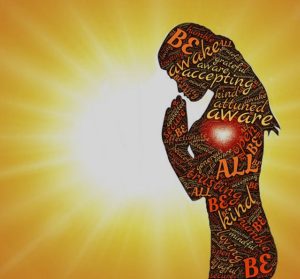
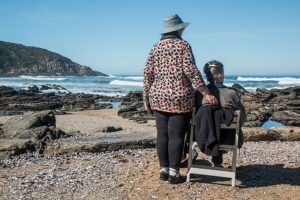 This past fall, I have supported others in their grief and losses and have also experienced my own. Facing the death of loved ones is a certainty, a reality of life from which we cannot be spared. In fact, every fall and winter season, we are given the opportunity to prepare ourselves for this experience of death and letting go. The leaves fall off the trees. Plants go dormant or die. Wildlife patterns shift with migrations. Temperatures drop and people move indoors, a form of preparing for the darkening and wintry days.
 The grace I have experienced has gifted me with the deep inner knowing that as Father Thomas Keating says, ‘in the death is the resurrection’. And Leonard Cohen sang ‘there is a crack in everything, that is how the light gets in’. In the grace of the Universe, death is the birth to new life. It is the path of transformation. The water, the fire, the air/breath, all return to the Source to be utilized in all of creation’s pure spirit.
 This year of my life I have lived in community with all of you. You each connect me to my truest self, the place where I can drink from my holy peace. And so I invite you to this year’s
  I remember that fateful night clearly and with great detail. It’s not that I try to remember the details. They are simply etched in my memory. What has changed, however, is the anger, the resentment of being placed in such a vulnerable situation, feeling powerless to stop the reality that was unfolding. Even as that night turned to morning, a primary question I asked myself was: What does it mean to be a peaceful person and acknowledge my anger and deep hurt? What do I choose to do with my anger and hurt? I already knew I did not want the choice and behaviour of another to change the true nature of who I was— a kind and peace-building person.
 Some believe that forgiving others is a process. Perhaps. Grieving was a ‘process’ and it’s different than forgiving. Healing from trauma was a process too and it’s different than grieving and forgiving. But when I learned the skill of forgiving, the skill of releasing the resentment of the past, forgiveness was a singular event. When we learn how to transfer our wisdom out from the anger (which reveals how deeply we care about ourselves and what we value) into our vision for a better future, we can learn that forgiving the present drama need not take long.


 SLOW DOWN THE CONVERSATION! As I mentioned, ‘drama’ is fast and mindless. So slow down the conversation. Put in breaks such as a 24-delay in responding to emails or simply say in a conversation, ‘I will need 24 hours to think about what you just said and get back to you.’ Or, ‘let me go outside and put my feet on the ground and get centred, so I can show up here feeling good about how I am doing that.’
 Identify what you really need and value. Clarify what you really want to have happen and what the relationship really means to you. Perhaps you need to exit the relationship because it is draining your energy. Perhaps you each need to clarify what values and core needs are being disrespected so it becomes clear what you need or want to have happen instead of the ‘drama’. Don’t shortchange this step. Take the time to deeply listen to what you need and then the other person. When people come back to the same issue again and again, even ‘after it’s been discussed’, it signifies that a core need or value is still not validated, and people are still not feeling listened to. David Ausberger says that deep listening is really an experience of true love. Establish boundaries that reflect your core values and true needs so that your relationships have improved patterns of connection than ‘drama’.
 In this core belief, we enter the land of dependency and exclude ourselves from the blessings of life, of love and life-giving relationships. Our sense of shame and unworthiness causes us to ‘do for others’ what we cannot do for ourselves. We will not be able to open to love, nor the blessing of another. If we do not perceive ourselves as being worthy of someone’s blessing, we will not be able to stand and look someone in the eye and tell them what we need. Here, there is a lack of self-respect, a lack of boundaries and whole bunch of people-pleasing. In this land of dependency, we will find ourselves envious, resentful, exhausted and covet what we perceive others have or we give to them because we cannot give it to ourselves nor receive it from another. We lack kindness towards ourselves, remain disconnected with others and often fall into a state of passivity (-aggressiveness) about our lives.
 In this core belief, we find ourselves in the land of arrogance and pride. Our acts of ‘charity’ are really ‘blessings’ imposed … and for the receiver, not really a blessing at all. In this state of arrogance or superiority, our helping another is often wrought with the assumption ‘I know better.’ Cultures and peoples have been destroyed in the blind assumption that “our way is better than your way.” Culturally, reflect upon the disastrous results of the way First Nations peoples and tribes have been mistreated, abused and fundamentally disregarded. Connection, community and the life-giving spiritual knowing of our country and our Earth have been destroyed in this genocide. It’s often hard to fathom the depth of our failures toward First Nations people because of all we imposed. We failed to create boundaries of mutual respect and kindness, of common dignity for all people. The repercussions for these lack of boundaries and compassionate connection will be our burden for decades to come. What we did in this cultural example, we also do to ourselves personally and to others when we come with an attitude of I know how to ‘fix’ you.
 In this core operating belief, we find ourselves in the land of curses. Though we may find ourselves in a state of ‘likeness’ with each other, a state of common experience about what is ‘not okay’ around us or in our environment, our ‘joining together’ in this state is destructive, cynical and riddled with mutual contempt and despair. Though we both may be ‘down in the dumps’, we injure each other to prevent ourselves from being more miserable than the other. All heart connection is lost, annihilated or in perpetual threat. Again, we have no healthy boundaries here. Rather, we put energy into creating emotional walls and barriers, leaving us locked away from connection and in the stalemate of our own ‘inner hauntings.’
 Finally, this operating core belief sustains us in the land of blessing. This is the place of joining, of collaboration, of mutuality, equality, respect and appreciation. In this land, we can pray and chant the ‘Namaste’, the light in you is the light in me; the peace in you is the peace in me. In this land, we can care for each other in dignity and respect for each other. It is not that we are needy of each other, rather, in appreciation for what another values and for what we value, we respect and validate and support the unique worth of ourselves and the other. In the land of blessing, we seek to compassionately appreciate and ‘see’ the good in all things. Our boundaries here are flexible, clear, growing, strong, consistent and kind, sustaining the vitality of our own core essence. Because we respect and appreciate the goodness in ourselves and the other, our connections are real, open, compassionate and can be trusted.
 It was quite cold for the past couple of weeks, with enough snow to use my snowshoes. I love this weather as does Carlie. She has certain ‘snow games’ she loves to play which include digging for her green ball and jumping to catch the snow I kick. Lucy has aptly named this game ‘kick snow’. Carlie’s life purpose is about living our joy. It’s not a goal she has – it’s an innate attunement to a way of being in her world. It’s part of her expressed consciousness and intentionality!
 The ‘spirit of joy’ of this New Year can be a blessing of hope, of aspirations and of new intentions for changing toward our preferred future and who we hope to be. To take full advantage of this ‘celebrative spirit’ which currently inspires us, we need to co-create with and absorb this ‘spirit of joy’ into our New Year’s hopes and wishes for a finer year.
 What I have learned over the years is that for me, truly inspiring intentions toward my vision of a more peaceful world, where all beings are healthy, happy, prosperous and at peace (thus justice and kindness are core values of our common humanity and determine our relationships with all of life) are the catalyzers for my change. Whether it’s through a spiritual word which focuses and empowers me, or a soul expressed intention which expands and informs my actions, these simple and yet powerful words carry me gently, cleanly and synchronistically beyond my familiarities toward the reality of my vision well lived.
 Happy New Year to all young and old and those in between. To those who stand tall and to those who crawl on the ground. To those who fly and to those who swim. To those who sing and to those who howl. To those who bloom and bear fruit and to those who mushroom and grow in groves. To those who trickle and wind, and to those who ebb and flow. To those who shine and radiate and to those who cause darkness through cycles, I wish you a year of joyous happiness, healing hearts and bodies, and the essence of abundance that is sufficient, generous and sustainable for all. Blessed be.